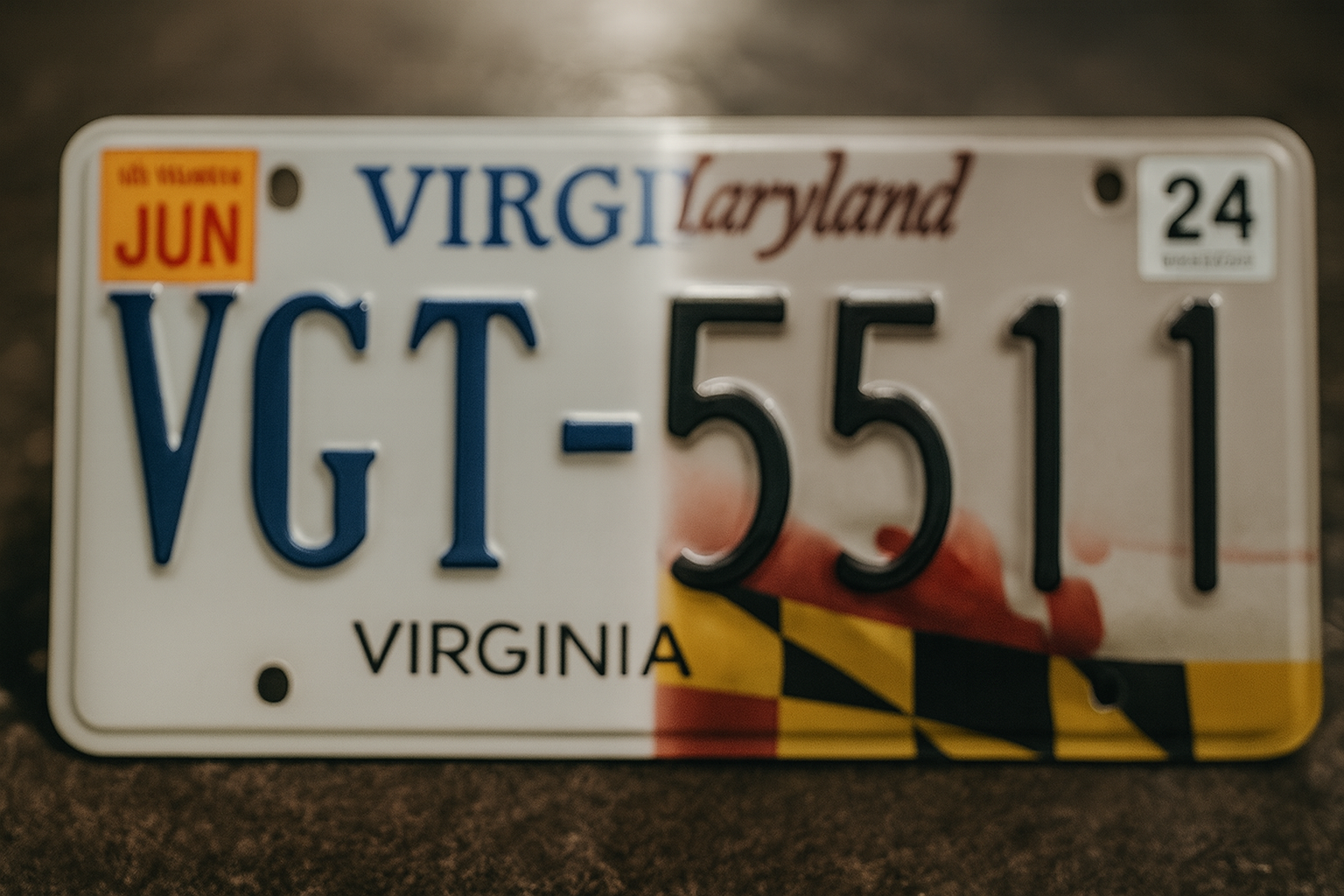
In recent years, an increasing number of Maryland residents have been found registering their vehicles in Virginia, taking advantage of the state’s more lenient and cheaper registration process. While this practice may seem like a quick fix to avoid Maryland’s higher fees and taxes, it exposes a broader issue rooted in Maryland’s often criticized, and predatory vehicle registration and insurance system.
Virginia law permits non-residents to register vehicles within the state, and many Maryland residents have exploited this legal loophole. According to a report from the Maryland Department of Transportation, over 111,000 vehicles registered in Virginia are linked to Maryland addresses. This practice is estimated to cost Maryland between $8 million and $12 million annually in lost registration fees alone not to mention the potential impact on local revenue and infrastructure funding.
Many drivers are motivated by the lower registration fees in Virginia, and in some cases, by the perception that Virginia’s car insurance is less expensive or less predatory than Maryland’s. By registering their cars in Virginia, they bypass Maryland’s higher taxes, fees, and sometimes confusing or aggressive insurance requirements.
Maryland authorities have started cracking down on this loophole, pulling over vehicles with Virginia plates and verifying addresses. When drivers are found to be registered in Virginia but residing in Maryland, their tags are confiscated, and they are required to register in Maryland and pay applicable taxes and fees. This enforcement aims to prevent tax evasion but also highlights the ongoing tensions surrounding vehicle registration policies.
Beyond registration, the car insurance landscape in Maryland is often criticized as being overly complicated and costly. Many drivers argue that Maryland’s insurance premiums are inflated and that the system favors large insurance corporations at the expense of everyday motorists. Some even describe the process as a “scam,” pointing out that drivers can be trapped into paying exorbitant rates with little transparency or recourse.
The combination of high insurance costs and costly registration fees creates a financial barrier that disproportionately impacts middle- and low-income residents. For those looking to save money, registering in Virginia might seem like an attractive alternative, but it often comes with hidden risks such as potential fines, legal issues, or the loss of insurance coverage if policies are not properly maintained.
The practice of registering in Virginia to circumvent Maryland’s fees and insurance requirements underscores a larger issue: Maryland’s system can feel burdensome and, at times, predatory. Many residents see it as a system designed more to generate revenue than to serve the needs of drivers. As enforcement increases, the hope is that more residents will comply with Maryland law, but the underlying concerns about fairness and affordability remain.
Critics argue that Maryland should re-evaluate its vehicle registration and insurance policies, making them more transparent, fair, and affordable. Eliminating unnecessary fees, reducing insurance premiums, and cracking down on predatory practices could help retain residents and ensure the system works for everyone not just large corporations and government coffers.
In the meantime, Maryland drivers must weigh the risks of exploiting loopholes against the potential penalties. As the crackdown continues, the message is clear: playing the system may offer short-term savings, but the long-term costs legal, financial, and moral are often not worth it.
The trend of Maryland residents obtaining Virginia tags to dodge higher registration fees and insurance costs highlights frustrations with the state’s current system. While it may seem like a harmless workaround, it exposes larger issues of fairness and predatory practices. Ultimately, meaningful reforms are needed to create a more equitable system that protects drivers and ensures revenue is fairly collected to support Maryland’s roads and communities. If not people will find an alternative.
Fix the system if you want people to participate.