
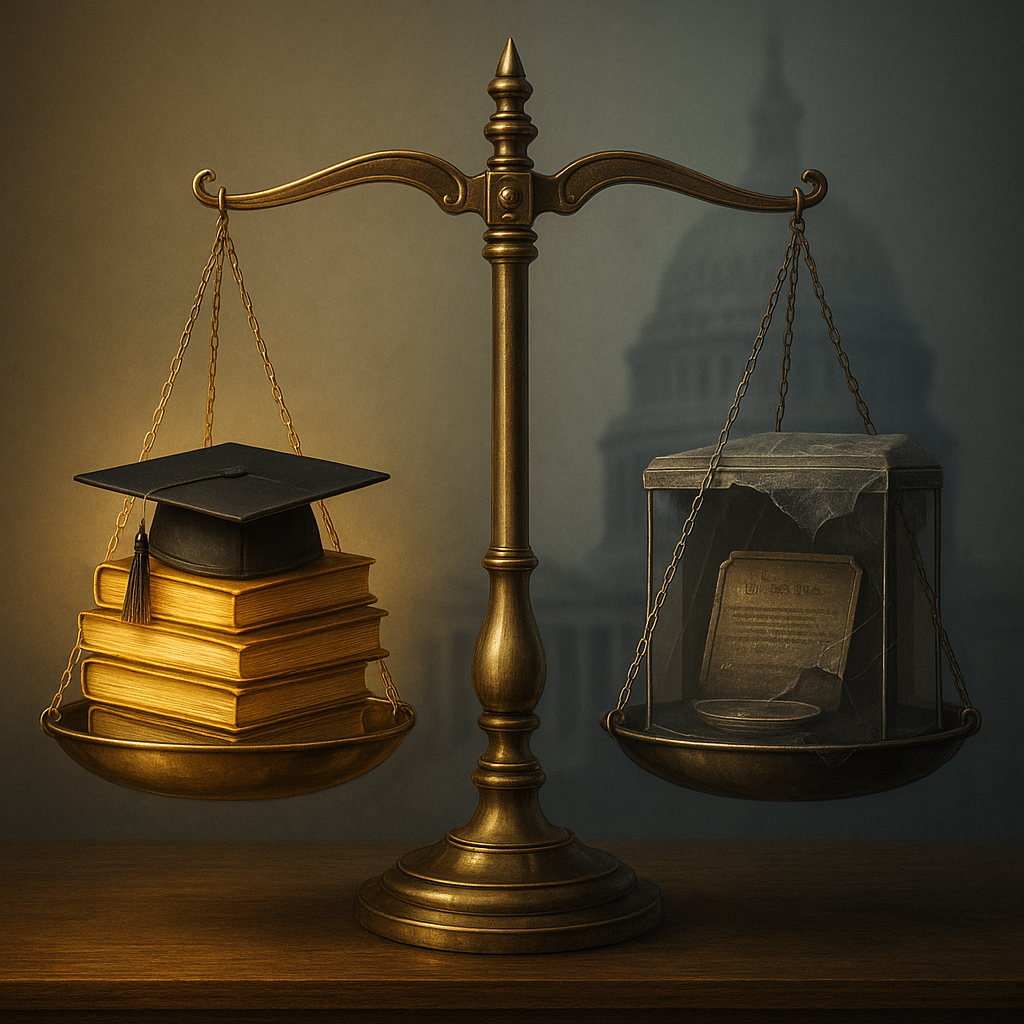
The Trump administration is advancing new measures that both expand support for historically Black colleges and universities (HBCUs) and reshape federal cultural institutions. Together, these developments represent a striking balance of investment and controversy.
Landmark Funding Boost for HBCUs
In September 2025, the Department of Education announced a major funding shift, allocating $500 million to HBCUs and tribal colleges. The move, framed by the administration as a commitment to “merit and excellence,” comes through the redirection of funds from diversity, equity, and inclusion programs eliminated in the latest federal budget.
The new commitment builds on previous actions during Trump’s first term. In 2019, the administration signed the FUTURE Act, securing $250 million in permanent annual federal funding for minority-serving institutions. Trump also ordered the cancellation of hundreds of millions in federal relief loan repayments owed by HBCUs, providing further relief.
Education Secretary Linda McMahon said the new package is designed to give Black colleges “long-term stability and growth,” ensuring their competitiveness in science, engineering, and workforce development programs. HBCU leaders have called the funding “historic” in scope, noting that it provides critical resources for institutions that have historically been underfunded.
Smithsonian Museums Targeted for Review
At the same time, the White House has intensified its review of Smithsonian Institution museums, particularly the National Museum of African American History and Culture (NMAAHC).
In March 2025, President Trump signed the executive order “Restoring Truth and Sanity to American History,” directing museums and cultural institutions to eliminate what the administration described as “divisive or anti-American” content. The order specifically cited NMAAHC’s focus on slavery and systemic racism, which the president criticized as portraying America in an “overly negative light.”
Reports indicate that certain artifacts, including items related to the civil rights movement, have faced audit and possible removal. Smithsonian officials, however, maintain that no items have been permanently withdrawn and that exhibit rotations are part of standard practice.
The administration has also closed the Smithsonian’s diversity office and placed conditions on funding tied to compliance with the new order. Supporters argue the revisions will highlight American progress and unity, while critics warn of potential “whitewashing” of history.
A Dual Legacy
These developments highlight a dual track in federal policy. On one side, HBCUs are experiencing record levels of federal support, providing long-term financial stability for institutions serving Black students. On the other, the nation’s premier African American museum is facing unprecedented political oversight that could reshape how slavery and race are presented in national history.
Observers note that both actions will have lasting impact: one in strengthening higher education opportunities for underserved communities, the other in shaping how future generations engage with America’s past.
Would you like me to now help draft potential headlines and subheadlines for this article so it stands strong in BSJ’s publication style? That way, you’ll have options for framing the story before layout and release.